
Investment News & Regulatory UpdatesRegulatory update (in force)
Saudi Arabia opens property to foreign buyers: the law, the zones and the costs
Since 22 January 2026 non-Saudis can own property in approved zones, and the zones for Riyadh and Jeddah were published in June 2026. Who can buy where, what it costs, and what it does not give you.
- Author
- Bee Haven International
- Published
- Facts verified
- Reading time
- 2 min read
 Saudi Arabia
Executive summary
The updated Law of Real Estate Ownership by Non-Saudis (Royal Decree M/14 of 14 July 2025) took effect on 22 January 2026. Non-resident foreigners may own only inside zones approved by the Cabinet in June 2026: in Riyadh mainly the government giga-projects, in Jeddah the city centre and 55 development zones. Legal residents may also own one home outside the zones, but not in Makkah or Madinah. Purchase taxes and fees for non-Saudis can reach 10%, Riyadh rents are frozen for five years from September 2025, and ownership alone gives no residence right.
Key findings
- In force since 22 January 2026: Royal Decree M/14 of 14 July 2025.
- Non-residents may own only inside Cabinet-approved zones (approved June 2026).
- Riyadh zones are mainly giga-projects; Jeddah has its city centre plus 55 development zones.
- Residents may own one home outside the zones; Makkah and Madinah are limited to Muslim individuals and Saudi companies.
- Costs for non-Saudis up to 10%: 5% transaction tax plus a fee of up to 5%.
- Property gives no residence by itself; Premium Residency needs property worth SAR 4,000,000 or more.
Key figures
- Law in force
- 22 January 2026
- Royal Decree M/14 · REGA
- Purchase taxes and fees for non-Saudis
- Up to 10%
- 2026 · REGA Q&A
- Saudi real estate prices
- +2.6% a year
- Q2 2026 · BIS (national index)
- Premium Residency via property
- From SAR 4,000,000
- 2026 · Premium Residency Center
What changed. Saudi Arabia's updated Law of Real Estate Ownership by Non-Saudis (Royal Decree No. M/14 of 14 July 2025) entered into force on 22 January 2026. In June 2026 the Cabinet approved the geographic zones where foreigners who do not live in the Kingdom may buy. Both steps are in force; this is not a proposal.
Who can buy, and where
| Buyer | Where they can own |
|---|---|
| Non-resident foreigners | Only inside the approved zones |
| Legal residents (iqama holders) and Premium Residency holders | Inside the zones, plus one home for personal use outside them |
| Makkah and Madinah | Limited to Muslim individuals and Saudi companies |
Each zone sets the type of right on offer — full ownership or usufruct (a long-term right to use) — and maximum ownership percentages.
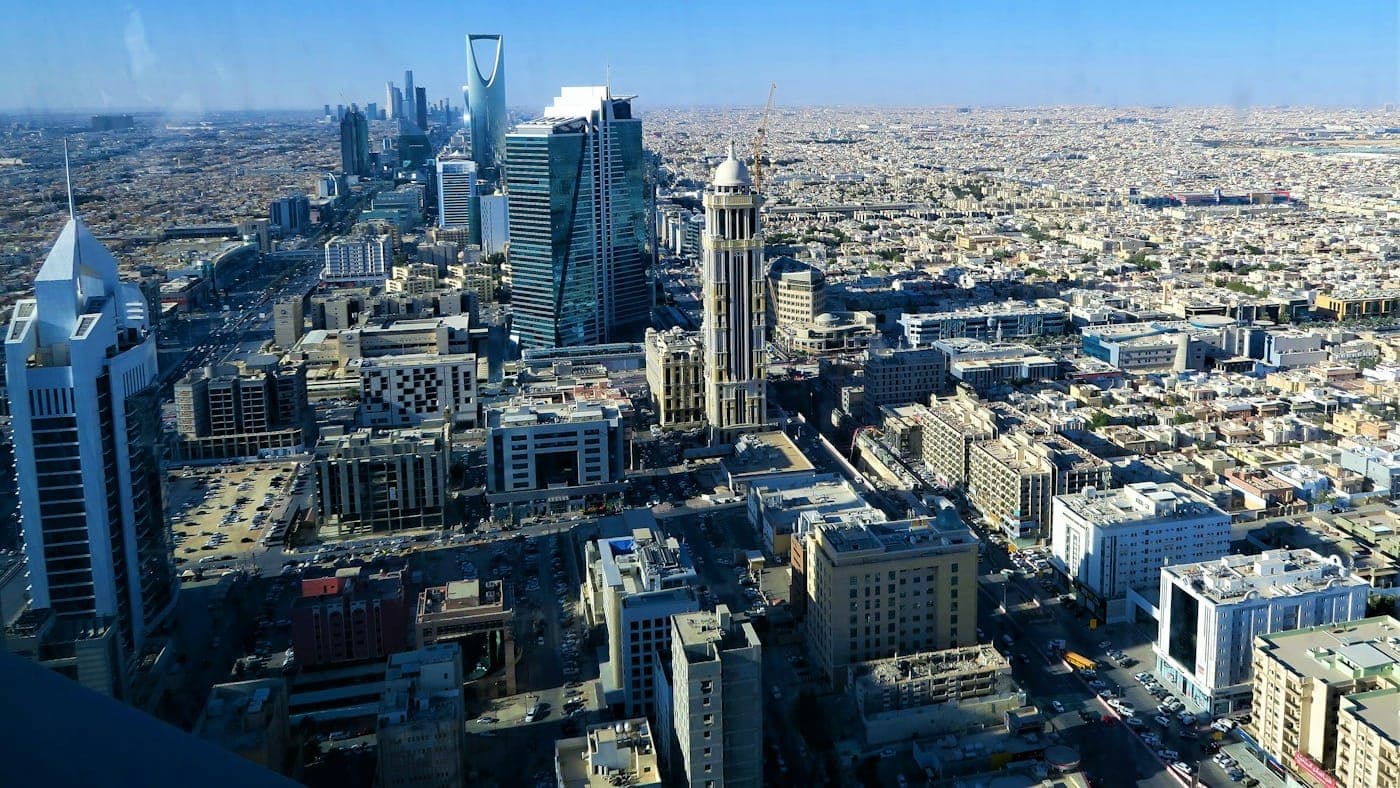
- Riyadh: the zones are mainly the government giga-projects: Qiddiya, New Murabba, Diriyah Gate, King Salman Park, KAFD, Sedra, the Sports Boulevard and arts district and King Salman International Airport, plus a transit-oriented development site.
- Jeddah: the widest choice — the city centre plus 55 development zones across the governorate.
Applications go through REGA's Saudi Properties platform. Non-residents first need a Saudi digital ID issued through an embassy, a Saudi bank account and a Saudi phone number.
What it costs
REGA lists a 5% real estate transaction tax and an additional fee for non-Saudi buyers of up to 5%, so total purchase taxes and fees can reach 10% of the price. Undeveloped land inside urban boundaries can also be taxed under the White Land Tax, at up to 10% of its value a year after the April 2025 amendments.
Rules that affect returns
- Riyadh rent freeze. From 25 September 2025, rents on residential and commercial leases within Riyadh's urban boundary cannot be increased for five years, including on new leases of previously let units. Leases must be registered on the Ejar platform.
- No reliable yield data. We found no reliable published gross rental yield for Riyadh or Jeddah homes, and the national price index (+2.6% in the year to Q2 2026, BIS) covers all real estate.
- New market, untested resale. Demand from foreign buyers is concentrated in large projects, and resale liquidity for foreigners has not yet been tested.
Property and residence
Owning property does not by itself give a residence right. A separate product, Premium Residency for Real Estate Owners, requires residential property worth SAR 4,000,000 or more and lasts as long as you own it. It does not lead to citizenship.
Before you commit
- Confirm the project is inside an approved zone and which right (ownership or usufruct) it offers.
- Budget up to 10% for taxes and fees on top of the price.
- Model your income with rents frozen if you are buying in Riyadh.
- Use a Saudi-licensed lawyer to check title and the developer's escrow arrangements for off-plan units.
See our market assessments for Riyadh off-plan zones and Jeddah development, and our Saudi Arabia guide.
Sources
The official and named sources behind the facts in this article, with the date we last checked each one.
- 1.Non-Saudi property ownership system enters into force (opens in a new tab)
Real Estate General Authority (REGA) · 22 January 2026 · checked 19 Oct 2026
- 2.Q&A: Updated Law of Real Estate Ownership by Non-Saudis (opens in a new tab)
REGA · checked 24 Oct 2026
- 3.Non-Saudi Real Estate Ownership in Saudi Arabia (Saudi Properties platform) (opens in a new tab)
REGA · checked 24 Oct 2026
- 4.Mapping the real estate foreign ownership zones (opens in a new tab)
Enterprise (EnterpriseAM) · 30 June 2026 · checked 24 Oct 2026
- 5.Saudi Cabinet approves foreign ownership zones in Riyadh, Jeddah and the holy cities (opens in a new tab)
IMI Daily · June 2026 · checked 24 Oct 2026
- 6.Saudi Arabia freezes rents in Riyadh for 5 years (opens in a new tab)
Arab News (reporting the Saudi Press Agency) · 25 September 2025 · checked 24 Oct 2026
- 7.Real Estate Owner Residency (opens in a new tab)
Premium Residency Center · checked 19 Oct 2026
Regulatory update (in force)
This article describes a rule in force on the date it was verified. Rules change and their application depends on your circumstances; confirm with the authority or a licensed adviser before acting. Information on this website is general guidance only. Investment values can rise or fall, immigration rules can change, and eligibility depends on individual circumstances and decisions by the relevant authorities. Please obtain independent legal, tax, immigration and financial advice.